The Long, Strange Journey of Psilocybin in the United States
- J. Shay

- Mar 9
- 5 min read
From sacred ceremony to prohibition and back again.

Psilocybin mushrooms have a way of slipping through the cracks of history. They grow quietly in forests, fields, and pastures—appearing suddenly after rain, doing their work, and disappearing again.
In many ways, the cultural history of psilocybin in the United States mirrors the mushrooms themselves: emerging, vanishing, misunderstood, and rediscovered.
The story isn’t just about a psychedelic compound. It’s about curiosity, fear, power, and the uneasy relationship between human consciousness and the institutions that try to regulate it.
Today, Oregon psilocybin services have opened a new chapter in that story.
But to understand how we got here, we have to go back much further.
The Beginning
Long before psychedelic mushrooms were known in the United States, they had already been used for centuries—likely millennia—by Indigenous cultures in Mesoamerica.
The Mazatec, Mixtec, and Nahua peoples used sacred mushrooms in healing and spiritual ceremonies. They called them teonanácatl, often translated as “flesh of the gods.”
These ceremonies were not just recreational experiences.

They were structured, guided, and embedded within traditions that emphasized:
healing
community
respect for the medicine
spiritual insight
Spanish colonizers documented these practices in the 1500s and quickly condemned them.
Missionaries labeled mushroom ceremonies as pagan or demonic and worked aggressively to suppress them.
Despite centuries of pressure, the knowledge survived—often quietly, in remote regions of Mexico.
Long before the West “discovered” psychedelic mushrooms, Indigenous traditions had already developed sophisticated frameworks for working with them.
The Moment America Discovered Psilocybin
Psilocybin entered modern Western awareness in the 1950s through an unlikely figure: banker-turned-mycology enthusiast R. Gordon Wasson.
In 1955, Wasson traveled to Oaxaca, Mexico and participated in a mushroom ceremony with Mazatec healer María Sabina.
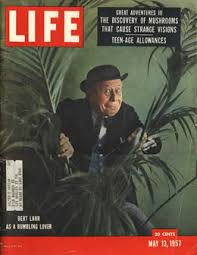
Two years later, he published an article in Life Magazine titled:
“Seeking the Magic Mushroom.”
The article triggered massive curiosity across the United States.
For many Americans, it was the first time they had ever heard of psychedelic mushrooms.
Scientists quickly took interest. Within a few years, the active compounds psilocybin and psilocin were isolated by Swiss chemist Albert Hofmann, the same scientist who first synthesized LSD.
Suddenly, psychedelic mushrooms were no longer just folklore.
They were a subject of serious scientific research.
The Brief Golden Age of Psychedelic Research
The late 1950s and early 1960s marked the first wave of psychedelic science in America.
Psychiatrists and researchers explored psilocybin therapy for a variety of conditions:
depression
alcoholism
trauma
end-of-life anxiety
Early clinical results were surprisingly promising.
Some studies suggested psychedelic therapy could produce major psychological breakthroughs in just a few sessions.
Researchers noticed something interesting: when the experience happened in a structured environment with guidance, outcomes improved dramatically.
Sound familiar?
Many of the principles that modern psilocybin facilitation in Oregon now uses were already emerging during this early research era.
But the momentum didn’t last.
When Psychedelics Became a Cultural Threat
By the mid-1960s, psychedelics had escaped the laboratory.
Figures like Timothy Leary began publicly promoting psychedelic substances as tools for personal liberation and cultural change.

His now-famous phrase:
“Turn on, tune in, drop out.”
To some, this sounded like spiritual exploration.
To political leaders, it sounded like social collapse.
The United States was already dealing with enormous upheaval:
the civil rights movement
anti-war protests
generational cultural conflict
Psychedelics became symbolically tied to all of it.
Rather than carefully regulating research, the government moved toward prohibition.
The War on Drugs and the Criminalization of Psilocybin
In 1970, the Controlled Substances Act classified psilocybin as a Schedule I drug.
This category is reserved for substances defined as:
having no accepted medical use
having high potential for abuse

This decision effectively shut down psychedelic research in the United States for decades.
Many scientists objected. Evidence already existed suggesting therapeutic potential, but the political climate of the time prioritized control over nuance.
Psilocybin was placed in the same legal category as heroin.
Research funding vanished.
Clinical studies stopped.
For nearly 30 years, psychedelic science went dormant.
The Quiet Return of Psychedelic Science
In the late 1990s and early 2000s, a new generation of researchers cautiously reopened the field.
Institutions like Johns Hopkins University and NYU began conducting modern clinical trials on psilocybin therapy.
The results were difficult to ignore.

Studies showed promising outcomes for:
treatment-resistant depression
anxiety in terminal illness
addiction recovery
emotional wellbeing
Perhaps most remarkable was the durability of the effects.
Many participants reported lasting improvements after only one or two guided sessions.
The cultural narrative began shifting.
Psilocybin slowly moved from being seen as a dangerous drug to a potential therapeutic tool.
Oregon Legalizes Psilocybin Services
In 2020, Oregon voters passed Measure 109, making it the first state in the U.S. to create a legal framework for psilocybin services.

This was not recreational legalization.
Instead, the law created a regulated system where adults can access supervised psilocybin experiences at licensed service centers with trained facilitators.
The Oregon model focuses on three core phases:
Preparation
Facilitated psilocybin experience
Integration afterward
In 2023, the first licensed service centers officially opened.
For the first time in more than fifty years, Americans could legally work with psilocybin in a structured and supported environment.
If you're curious about what this process looks like, you can begin by scheduling a Discovery Call, where we talk through questions and determine whether this path is right for you.
Why Integration Matters
One lesson modern psychedelic science has reinforced is simple:
The experience itself is only part of the work.
Real transformation happens when insights are processed and integrated into daily life.
That’s why integration support is a core part of responsible psychedelic practice.
If you’ve already had a psychedelic experience—whether in Oregon or elsewhere—One-on-One Integration Sessions can help unpack the meaning, emotions, and changes that often arise afterward.
Integration turns insight into action.
Without it, powerful experiences can fade into confusing memories.
The Role of Community in Psychedelic Healing
Another truth becoming increasingly clear is that psychedelic experiences can be deeply meaningful—but also isolating.
Many people return from powerful journeys with insights they struggle to talk about with friends, family, or coworkers.

That’s why spaces for grounded conversation matter.
The Lucid Collective Community was created as a place where thoughtful discussions about consciousness, healing, and psychedelic experiences can happen openly and respectfully.
Because growth rarely happens in isolation.
The Road Ahead for Psilocybin in America

Psilocybin’s legal future in the United States is still unfolding.
More states are exploring psychedelic decriminalization and therapeutic frameworks.
Research continues to expand.
Public perception is changing.
But important questions remain:
Who gets access to psychedelic healing?
Who benefits economically?
How do we respect the Indigenous traditions that preserved this knowledge?
Psilocybin mushrooms may be small, but the conversations they spark are anything but.
And if history has shown us anything, it’s this:
The human desire to explore consciousness doesn’t disappear for long.
Like mushrooms after rain, it tends to return.

What a great explaination of the history and future of Psyilocybin. So interesting!